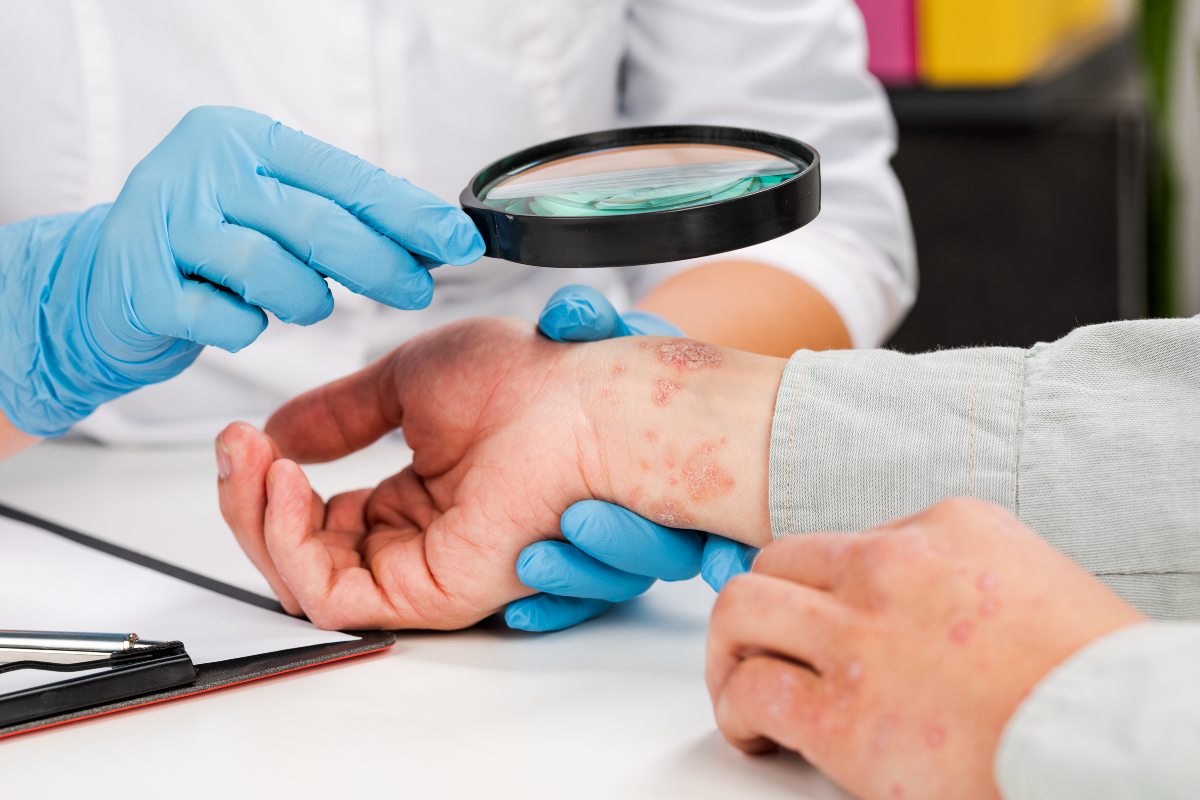
Nummular eczema is an inflammatory skin condition that requires proper management. In this article, we will explore in detail what it is, its characteristic symptoms, main causes, and triggers. We will also present various prevention methods and effective solutions for efficiently managing this dermatological condition.
Nummular Eczema – Definition, Symptoms, Causes, and Other Information About It
The information presented in this chapter is important for understanding a common but often overlooked skin condition. Nummular eczema can affect the quality of life of those who experience it, significantly influencing the appearance and feel of the skin. Below, we will focus on the significance, symptoms, causes, and how this condition affects the skin.
Nummular Eczema – What Is It and What Does It Look Like?
Nummular eczema is also known as discoid eczema. It is a chronic inflammatory skin condition that manifests as characteristic, circular-shaped lesions.
The term “nummular” comes from the Latin word “nummus,” meaning coin, referring to the circular shape of the lesions.
This condition is found in people of all ages, but it is more common among middle-aged adults and men. It particularly manifests during the cold season when the air humidity level is low.
The lesions associated with nummular eczema are usually well-defined. They can vary in size, with a diameter ranging from a few millimeters to several centimeters. Additionally, they can appear isolated or in clusters. They are frequently found on the limbs (arms and legs), trunk, hands, and in some cases, on the face.
Discoid Eczema and Common Symptoms – What Are They?
The symptoms of nummular eczema manifest differently from case to case. Among the most common are:
- Circular or Oval Lesions: One of the most specific symptoms is the circular or oval lesions that appear on the skin. These are well-defined and have clear borders, and their surface can range from dry and flaky to wet or crusted. Initially, the lesions may be pink or red, but they can become brown or hyperpigmented as the condition progresses or the lesion heals.
- Intense Itching: Itching can vary in intensity, from mild to severe. In some cases, the itching can become so intense that it disrupts sleep and affects quality of life. Frequent scratching can worsen the condition of the lesions and lead to skin breakage, increasing the risk of secondary infections.
- Moist or Crusted Surface: In the early stages, the lesions may have a moist surface or ooze a clear fluid. As the lesions evolve, the fluid can dry, forming crusts. These crusts can be yellow or brown, and their removal can leave the skin irritated and sensitive.
- Inflammation and Redness Around Lesions: The affected area may be inflamed and red, indicating the presence of a strong inflammatory reaction. This is usually a sign of the body’s immune response to triggers or the presence of skin infections.
- Cracks and Pain: In some cases, the skin around the lesions can become so dry and stiff that it develops painful cracks. These cracks can prolong the healing time.
Managing Nummular Eczema with Aloe Vera Supplements
Consuming Aloe Vera Gel at 3L ECO offers benefits for people with nummular eczema due to its anti-inflammatory, antioxidant, and immunomodulatory properties. Aloe vera contains active substances such as vitamins A, C, and E, which have antioxidant effects. It also has compounds that support the immune system’s function. Thus, it contributes to reducing excessive inflammatory reactions. Furthermore, it supports skin hydration and overall health, helping to maintain the integrity of the skin barrier. Its detoxification and digestive stimulation effects can help eliminate toxins from the body, which can support skin health.
[cta_produs style=”style_1″ product=”81951″ image=”https://aronia-charlottenburg.com/wp-content/uploads/2024/12/1.2.-Eczema-discoida-Gel-de-Aloe-Vera-la-3L-ECO.jpg”]
Choose too to enjoy healthy skin from deep within, and add this natural, pure, and ecological gel to your diet!
Nummular Eczema – Causes and Triggers
Nummular eczema is a chronic dermatological condition whose onset can be caused by several factors. However, the exact mechanisms are not fully understood. It is believed that a combination of genetic, environmental, and immunological factors contributes to the development of this condition.
In particular, skin barrier dysfunction and an abnormal inflammatory response are central elements in the development of nummular eczema. Below, you will discover some of the main factors that can trigger or worsen this condition.
Discoid Eczema, Causes, and Triggers
Dry Skin and Skin Barrier Dysfunction:
- One of the main causes of nummular eczema is damage to the skin’s protective barrier. Dry skin can lead to cracking and loss of natural moisture, which increases the risk of inflammation and irritation. This damage to the skin barrier can make the skin more vulnerable to contact with irritants or allergens, which can trigger acute eczema episodes.
Genetic Factors and Genetic Predisposition:
- Individuals with a family history of skin conditions have a higher risk of developing nummular eczema. This genetic predisposition suggests that hereditary factors contribute to the manifestation of eczema.
Environmental and Seasonal Factors:
- This condition is more frequent in the cold winter months when humidity levels decrease and the air is drier. Also, temperature changes and exposure to the dry air of heating systems can worsen symptoms. Certain additional environmental factors can trigger the appearance of lesions or worsen the skin’s condition. These include pollution, cigarette smoke, or contact with aggressive chemicals, such as detergents and solvents.
Stress and Emotional Factors:
- Stress can influence the immune response and can trigger or worsen skin inflammation. Negative emotional states are known to exacerbate the symptoms of many dermatological conditions, including nummular eczema. Chronic stress can lead to a vicious cycle where symptoms become more severe, which can generate more stress and anxiety.
Infections and Inflammation:
- Some individuals suffering from nummular eczema may have an increased predisposition to bacterial, fungal, or viral skin infections. These infections can trigger inflammatory responses that worsen existing lesions or trigger new skin rashes. Staphylococcus aureus is a bacterium frequently involved in the superinfection of eczema lesions.
Allergens and Irritants:
- Contact with certain chemicals, such as detergents, harsh soaps, perfumes, or synthetic materials, can cause skin irritation or allergies. These substances can trigger or worsen eczema by stimulating an inflammatory response in the skin.
Hormonal Imbalances:
- Hormonal changes, such as those that occur during pregnancy, menopause, or the menstrual cycle, can influence the severity of nummular eczema. Hormonal imbalances can affect the immune system and contribute to skin inflammation.
Is Nummular Eczema Contagious?
Nummular eczema is not a contagious condition. It does not spread through direct contact with affected skin or through the use of personal items of a person with eczema. It is a chronic inflammatory problem, not a transmissible bacterial, viral, or fungal infection.
Sometimes, lesions may resemble infectious rashes, such as fungal infections or impetigo. However, they are caused by internal inflammatory processes and not by contagious microorganisms.
Although eczema is not transmissible, lesions can become superinfected with bacteria or fungi due to skin cracking or frequent scratching. In such cases, the secondary infection may require specific treatment prescribed by a doctor, but this does not mean that the eczema itself is contagious.
Discoid Eczema – Prevention Methods and Management Solutions
The prevention and management of nummular eczema are based on reducing triggers, improving skin condition, and managing inflammation. Since this condition is chronic, an effective approach requires a combination of preventive measures and symptomatic treatments to reduce the frequency and severity of episodes. Here are some essential strategies for preventing and managing nummular eczema:
Skin Hydration:
- Maintaining optimal hydration is recommended to prevent skin dryness and cracking, which can worsen symptoms. It is advisable to apply emolient creams or rich moisturizing ointments daily, immediately after bathing, to retain moisture in the skin. For example, skincare products based on urea or glycerin are effective in maintaining hydration.
Avoiding Triggers:
- Identifying and avoiding factors that worsen eczema are important for preventing recurrence. Using gentle, fragrance-free skincare products can help prevent irritation. Additionally, protective gloves can be worn during activities that involve exposure to chemicals.
Dry Skin Care:
- During cold months or in low-humidity environments, it is important to use a humidifier to maintain optimal air humidity levels. This helps prevent excessive skin drying and reduces the risk of lesion development. It is also recommended to avoid hot baths and excessive use of soaps, which can dry out the skin.
Topical Treatment:
- In case of acute nummular eczema episodes, doctors may recommend corticosteroid creams to reduce inflammation and itching. These creams should be used as prescribed, as excessive application can lead to skin thinning. Additionally, non-steroidal creams, such as calcineurin inhibitors, can be used as an alternative to control inflammation.
Systemic Medications:
- In severe or recurrent cases, oral medications may be necessary to control inflammation. These may include systemic corticosteroids or immunosuppressants, such as cyclosporine. However, these treatments are usually reserved for cases that do not respond to topical therapies.
In addition to traditional treatments, we can also add an effective, 100% natural adjuvant to our diet, such as Aloe Vera Gel at 3L ECO. It contains 99.7% pure Aloe Vera gel with pulp, as we aim to preserve all its remarkable properties for the body. We ensure it contains no sugar, aloin, colorants, or emodin. We suggest drinking 100 milliliters daily to experience the long-term beneficial effects. Depending on your preferences, you can consume it sweetened, plain, or diluted.
[cta_produs style=”style_2″ product=”81951″ image=”https://aronia-charlottenburg.com/wp-content/uploads/2024/12/2.-Dermatita-numulara-Gel-de-Aloe-Vera-la-3L-ECO-felii-de-castraveti.jpg”]
Avoiding Scratching:
- Scratching can worsen symptoms and lead to skin cracking or superinfections. It is recommended to keep nails short and wear cotton gloves at night to prevent involuntary scratching during sleep.
Stress Management:
- Stress can trigger or worsen eczema. Therefore, various relaxation techniques can be beneficial for reducing stress. Implicitly, they can reduce the risk of eczema episodes.
Use of Antibiotics or Antifungals:
- If lesions become superinfected, doctors may prescribe antibiotic or antifungal treatments. These are necessary to eliminate infections and allow the skin to heal more effectively.
By applying these measures and improving lifestyle, we can reduce the frequency of episodes and more effectively manage associated symptoms.
In conclusion, nummular eczema is a complex skin condition that can cause discomfort. Although not contagious, its symptoms can affect quality of life, and recurrences are frequent. By identifying and avoiding triggers, maintaining good skin hydration, and using appropriate treatments, we can control symptoms and prevent the condition from worsening. Furthermore, with the support of effective, natural, and ecological adjuvants, such as Aloe Vera Gel, we can benefit from healthy skin. For more recommendations and personalized approaches, it is advisable to consult a specialist doctor!
References:
- https://nationaleczema.org/eczema/types-of-eczema/nummular-eczema/
- https://www.healthline.com/health/skin/nummular-eczema
- https://www.medicalnewstoday.com/articles/323507
Photo source: shutterstock.com